
The Jet Stream Conundrum: Straight or Wavy, It's Always "Climate Change"
How Climate Change Alarmists Spin Every Weather Event

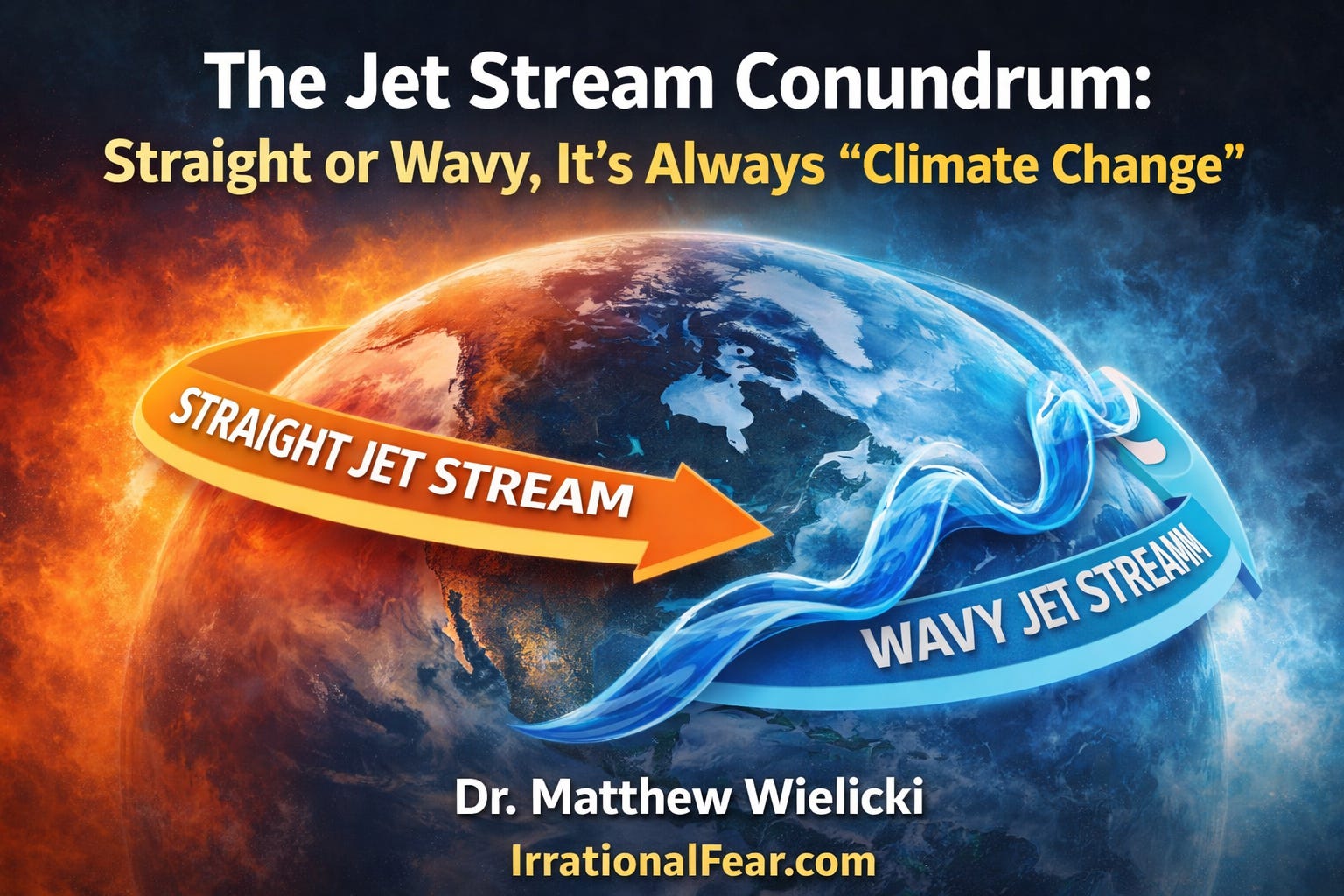
Is climate change really making winters colder? As brutal polar vortex blasts freeze the U.S. in 2026, many media outlets scream “global warming exposed”: a warming planet is paradoxically causing freezing temps? Discover the jet stream waviness scam and why natural variability trumps the CO2 blame game.
As winter bites the Northern Hemisphere with swirling snowstorms and extreme cold snaps, many in the media and some prominent climate scientists point fingers: climate change is making the jet stream “wavier,” leading to polar vortex intrusions.
We’ve seen headlines about how a warming world causes freezing weather. The mental gymnastics to explain “it’s so hot it’s cold” are Olympic-level.
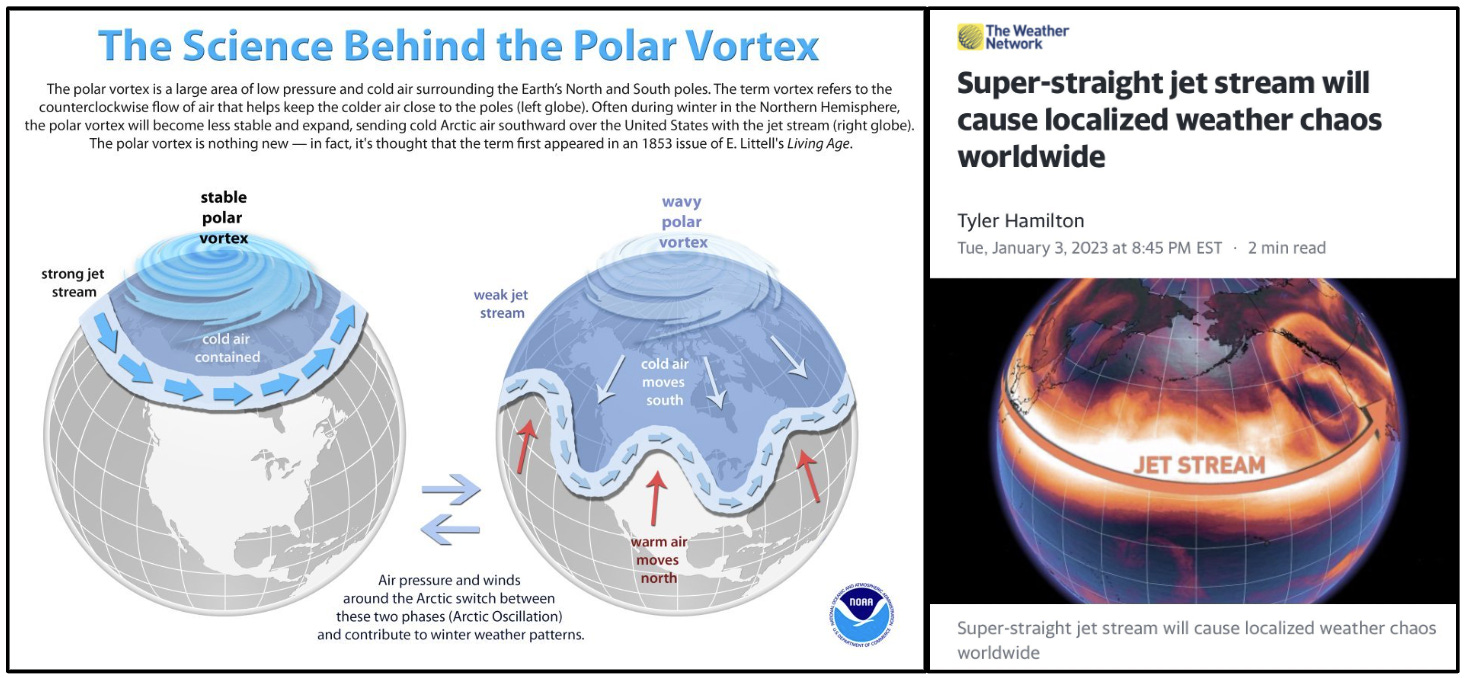
Whether the jet stream is super-straight (causing “localized chaos worldwide,” as one 2023 Weather Network article below put it) or extra-wavy (blamed for dumping Arctic air southward), it’s spun as evidence of anthropogenic global warming unraveling our weather patterns.
But what is the polar vortex, and how does it link to the jet stream? The polar vortex is a vast low-pressure zone of cold air around Earth’s poles, strongest in winter. Think of it as a spinning top of frigid air in the stratosphere, contained by the polar jet stream—a fast-flowing air river in the troposphere acting as a barrier.
When the jet stream weakens or meanders more, polar vortex air can displace southward, bringing Arctic blasts to the U.S. Midwest or Europe. Many outlets claim rapid Arctic warming (Arctic amplification) weakens the pole-to-mid-latitude temperature gradient, making the jet stream erratic and boosting these events.
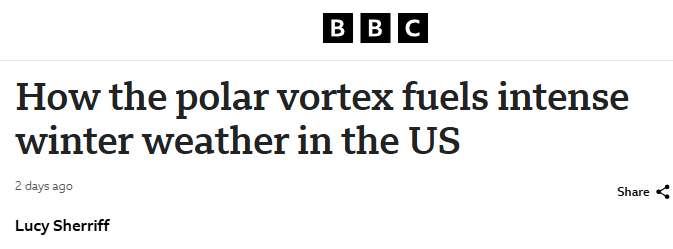
Recent coverage: Yale Climate Connections (Feb 2025) ties cold snaps in a warming world to a weakened, wavier jet letting Arctic air spill south. MIT’s explainer notes that faster Arctic warming might increase polar vortex disruptions, but scientists debate the link’s strength. BBC (Jan 2025) adds nuance, saying it’s “unknown” if climate change affects the vortex, with no model consensus, and cold extremes are less frequent overall due to warming.
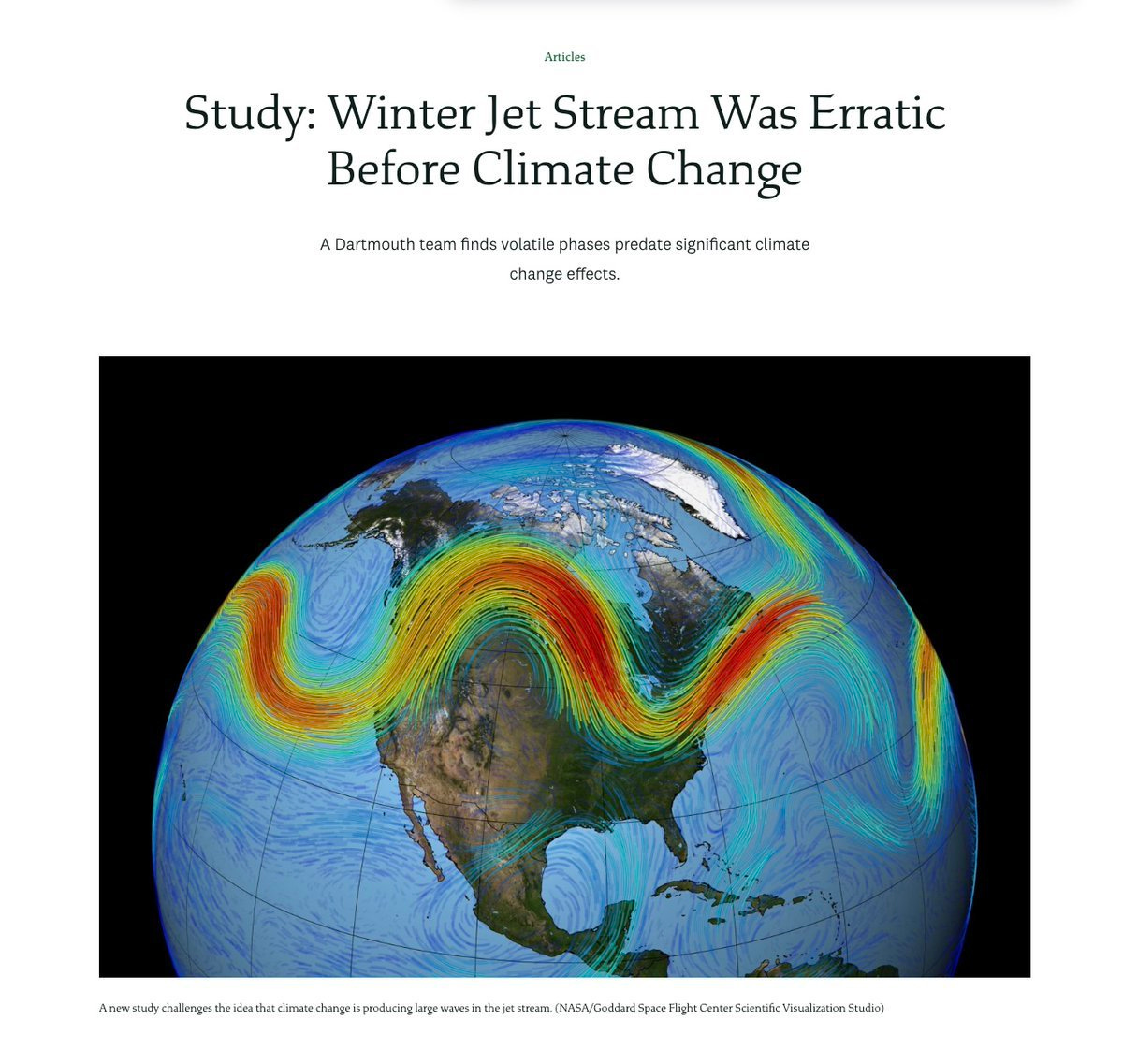
Dartmouth’s news on a 2025 study shows the jet stream’s erratic behavior isn’t new. More on that soon.
This narrative fits the “climate crisis” playbook: every weather event, even normal ones, becomes proof of doom. Straight jet stream? Climate change locks in extremes. Wavy? It unleashes cold outbreaks.
Spin the wheel, and it always lands on “blame CO2.” But as I’ve argued before, the science doesn’t support this alarmism. In my 2024 piece, “The Jet Stream... Separating Scientific Reality from Climate Alarmism,” I highlighted how alarmists claim warming makes it “hyper-wavy,” leading to more extremes. But as a 2020 Science Advances study showed, there’s no statistically significant long-term trend in waviness over 40 years. Attributing specific events to climate-driven waviness is dubious; natural variability dominates. I called it propaganda from the “climate-industrial complex,” urging focus on real science over sensationalism.
The house of cards is crumbling further with a bombshell 2025 paper that shows modern jet stream waviness is nothing special… it’s well within natural historical variability, predating significant human influence. Using machine learning (self-organizing maps) on reanalysis data back to 1901, they reconstruct jet stream behavior far beyond the satellite era (post-1979). Their findings? The jet stream was often wavier in the mid-20th century than during the 1990-2010 “enhanced waviness” period blamed on Arctic amplification.
This directly challenges the idea that recent polar vortex events are a new fingerprint of climate change. Instead, it’s natural variability at play.
To get the full scoop on this game-changing research, including detailed breakdowns of its figures showing waviness trends over the 20th century, subscribe now. Paid members gain access to over 425 unique articles where I dismantle the climate crisis narrative with facts, not fear.
